
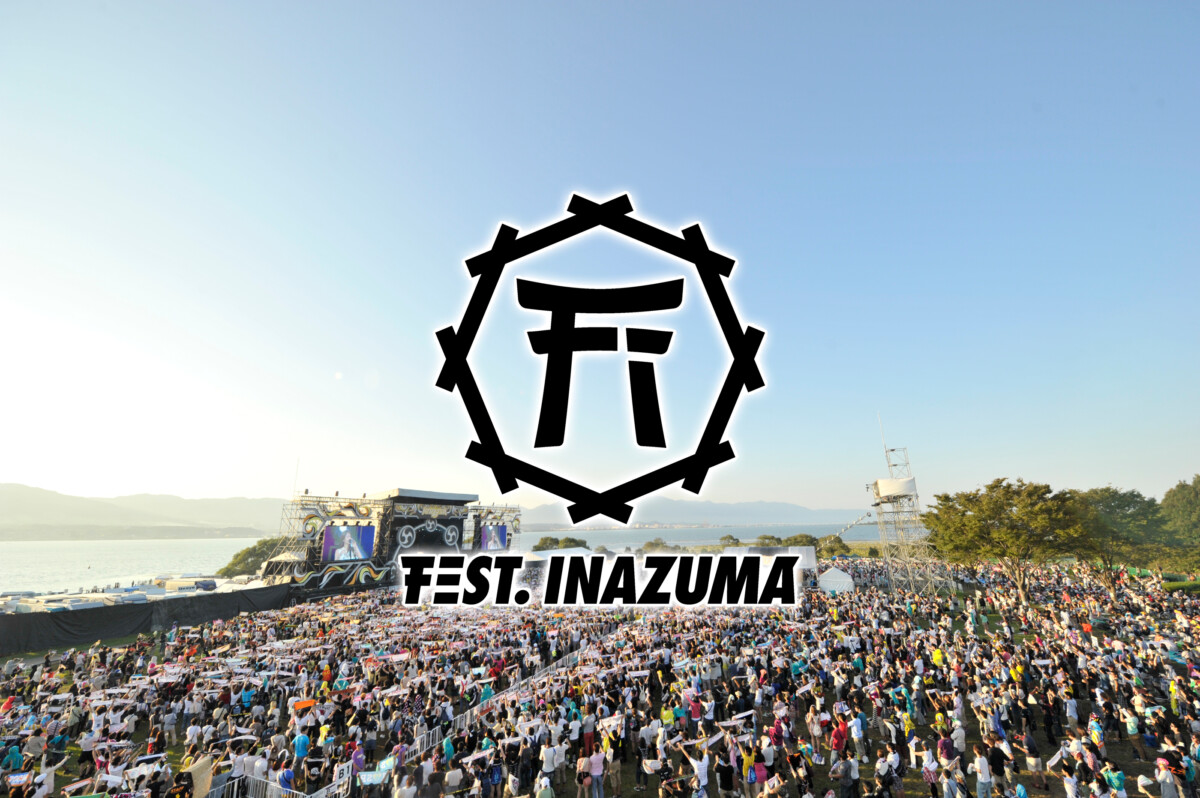
From Inazuma Rock Fes to FEST. INAZUMA: How a Lakeside Rock Festival Became a Modern Shiga Tradition
Every September, the shore of Lake Biwa changes completely.
Music fills the air. Crowds gather by the water. Local food stalls, community booths and live stages appear across the lakeside grounds.
This is Inazuma — one of western Japan’s largest music festivals, created in Shiga by Shiga-born artist Takanori Nishikawa.
Since its launch in 2009, Inazuma Rock Fes has grown into something much larger than a rock festival. It has become connected to Lake Biwa, local communities, environmental action, food, and the people who live here.
And in 2026, after 17 years, it is entering a new chapter.The story of Inazuma begins in 2008.That year, Takanori Nishikawa — an artist born and raised in Shiga — was appointed the prefecture’s first Shiga Furusato Tourism Ambassador.
But Nishikawa did not want the title to be merely ceremonial. He wanted to give people a reason to actually come to Shiga.
So he asked himself a simple question:
What can I do for the place I come from?
His answer was music.
In 2009, Nishikawa launched Shiga’s first large-scale outdoor rock festival on the Karasuma Peninsula, a stretch of land beside Lake Biwa in Kusatsu City.
It was called Inazuma Rock Fes.
Nishikawa himself performed at the first edition as both T.M.Revolution and with his band abingdon boys school.
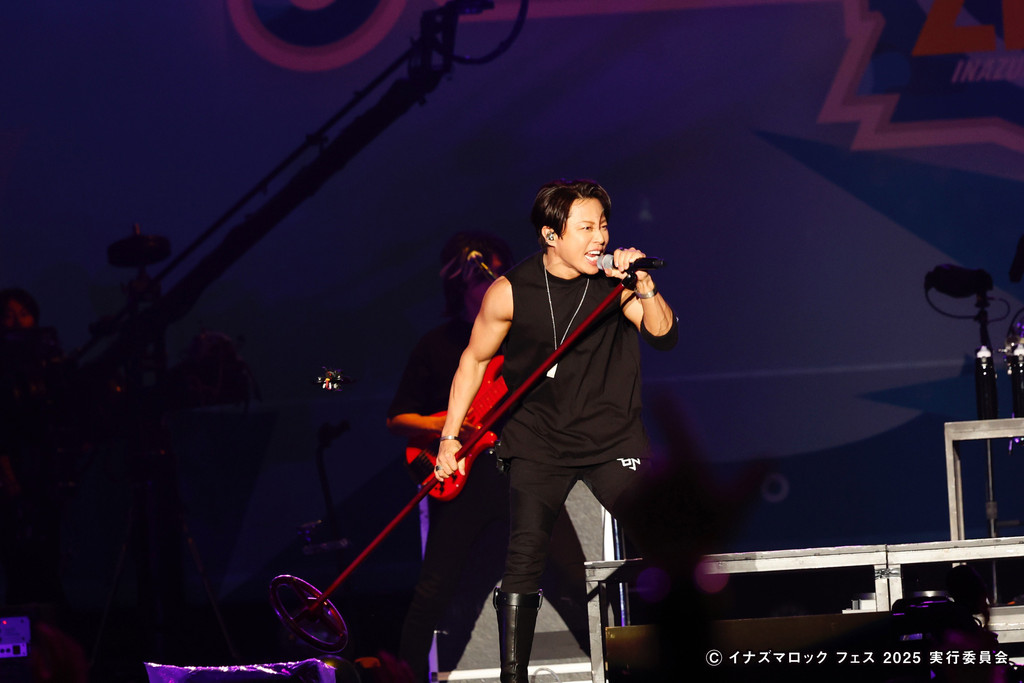
But from the very beginning, Inazuma was never designed to be only about the music.
Alongside the concerts, the festival hosted a tourism and local-products fair, introducing visitors from outside Shiga to the prefecture’s food, businesses and culture.
For local residents, it also carried another message:
Something this big can happen here, too.
That idea — bringing people to Shiga, and letting them experience the place itself — was built into Inazuma from its first year.
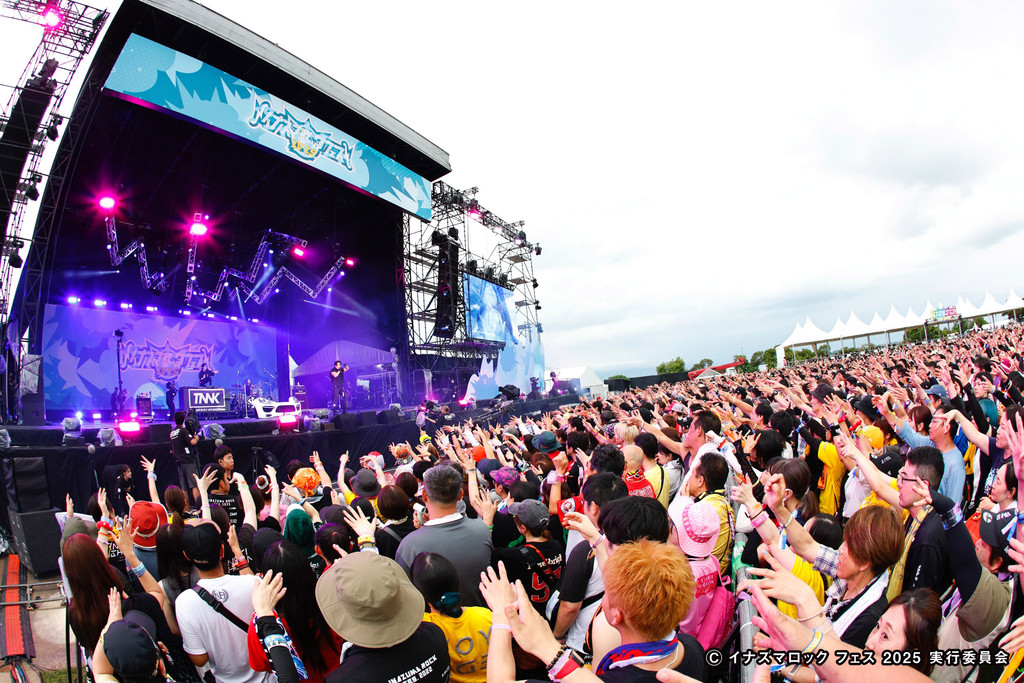
A festival that gives back to Lake Biwa
Here is another reason Inazuma feels different from a typical music festival.
From the beginning, it has carried the message:
“Raise your voice for the future of water.”
Lake Biwa is not simply the backdrop to the festival.
It is the largest lake in Japan, and for Shiga, it is part of everyday life — a source of water, landscape, culture and local identity.
Environmental conservation of the lake and support for the local community have therefore been part of Inazuma’s purpose from the start.
People come to Shiga for the festival.
They discover its food and culture.
And part of what the festival generates is returned to the place that hosts it.
Every year, Nishikawa visits the Shiga Prefectural Government to make a donation.
From fiscal 2009 through the 2025 festival (excluding 2020:held online and 2021:canceled), donations were made 15 times, reaching a cumulative total of approximately 45 million yen.
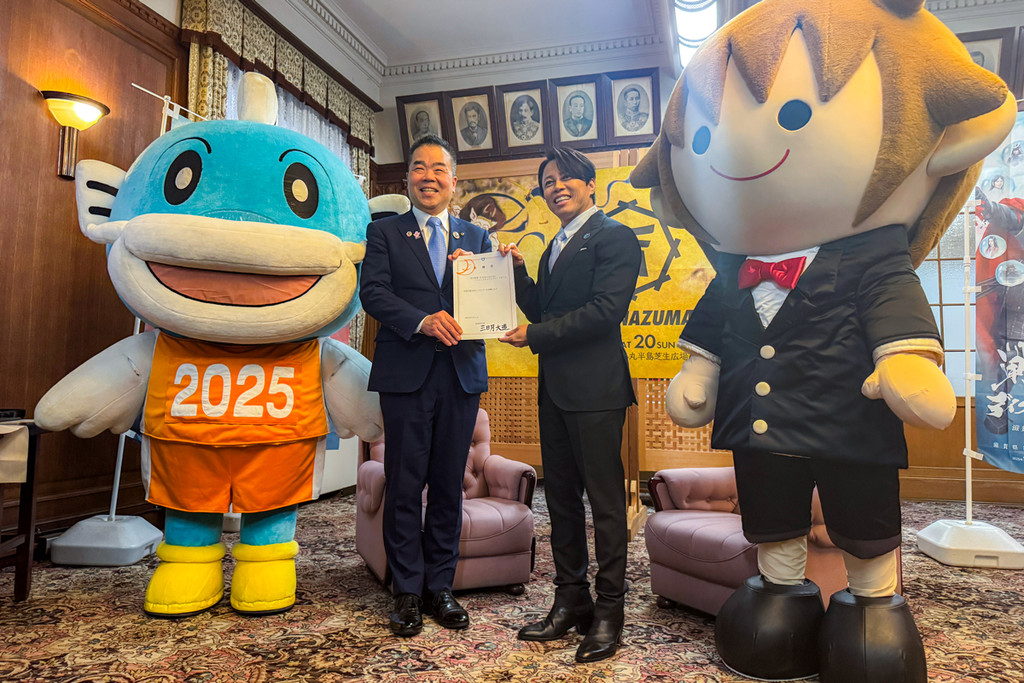
The festival has also made donations to Kusatsu City, where Inazuma is held, and more recently to Moriyama City, which serves as a departure point for festival shuttle buses.
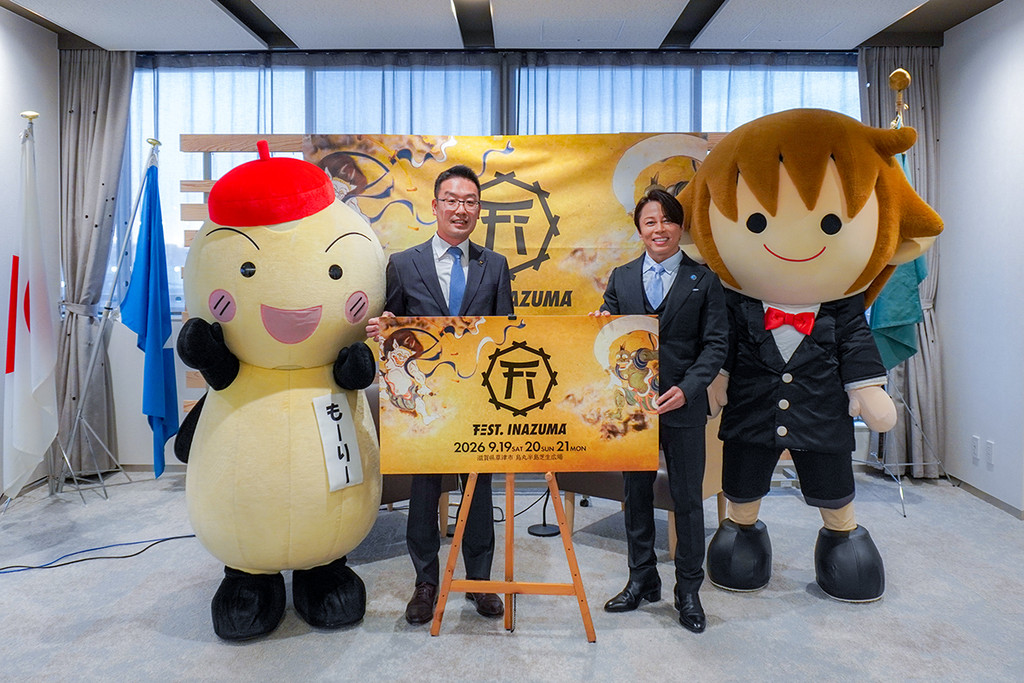
In other words, the energy of those few festival days does not simply disappear when the stages come down.
Some of it flows back into Lake Biwa and the communities around it.
Year after year, Inazuma has built that cycle into the festival itself.
More than a concert: the festival’s free area
If you want to understand how Inazuma became something closer to a local festival, the free area may be the best place to look.
You do not need a concert ticket to enter.
And once inside, there is much more than music.
Food stalls are selected primarily through the Inazuma Food Grand Prix, a competition held ahead of the festival each year.
That means the food is not simply an afterthought between performances.
For many visitors, eating your way through the festival is part of the experience.
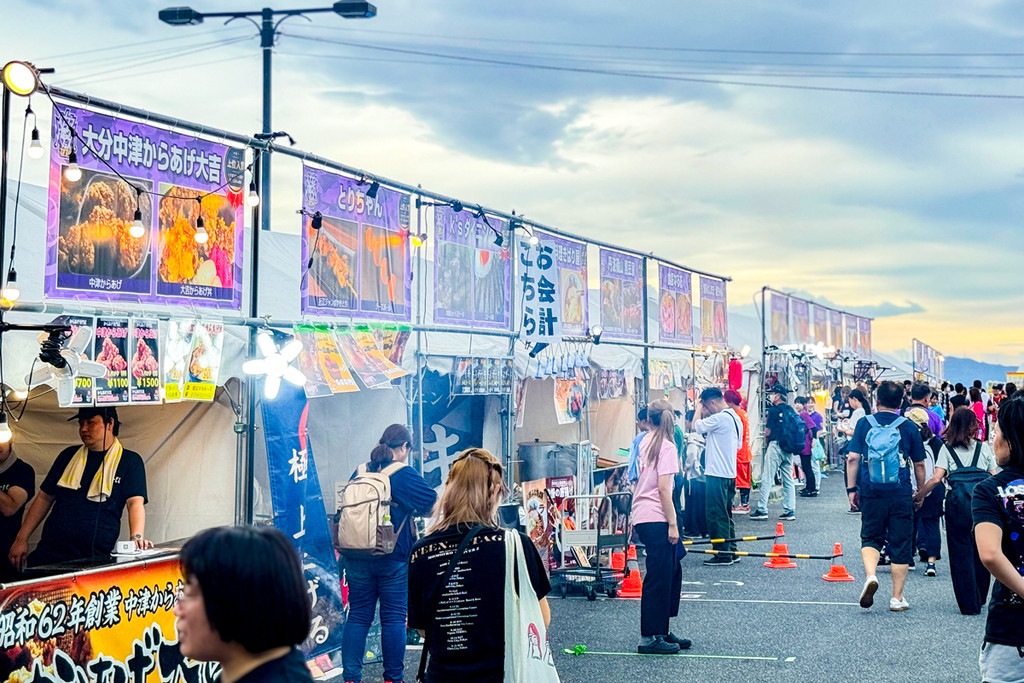
Local municipalities and organizations from around Shiga also set up booths.
At the interactive tourism area known as Oide-na Shiga, visitors can meet people from different parts of the prefecture and discover local places, activities and traditions.
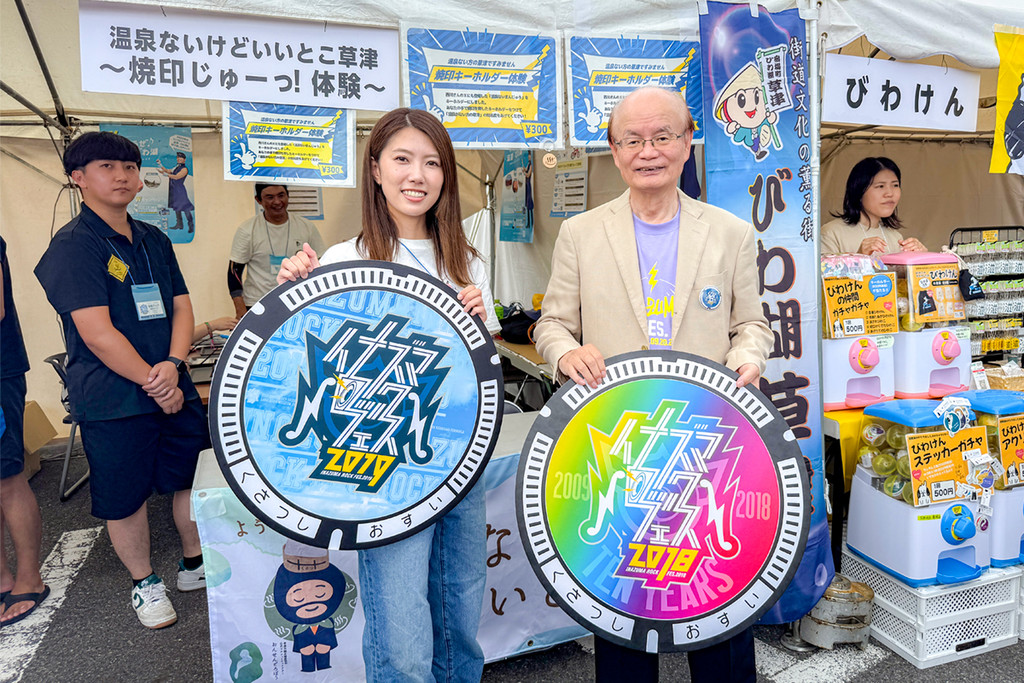
Then there are the companies.
Some are deeply familiar to people in Shiga, such as the local supermarket chain Heiwado.
Others come from much further afield — including BANDAI NAMCO, connected with the Mobile Suit Gundam SEED series, and S.T. Corporation, a company whose television commercials have featured Nishikawa.
Every year, these booths come with new ideas, collaborations and experiences.
Simply wandering through them has become part of the fun.
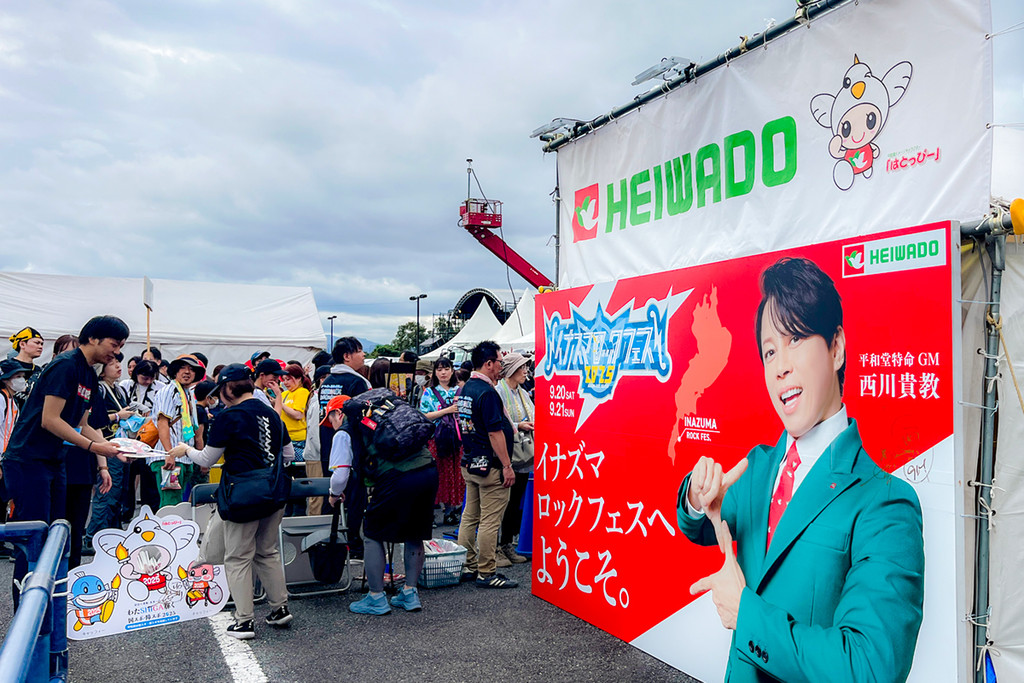
Until last year, the free area also featured stages for comedians and local mascot characters, as well as areas designed for children.
You could spend an entire day here without ever entering the ticketed live area.
And that changed the meaning of the festival.
Inazuma was no longer somewhere only dedicated music fans travelled to.
Local families came.
Children came.
People who might never buy a rock-festival ticket came.
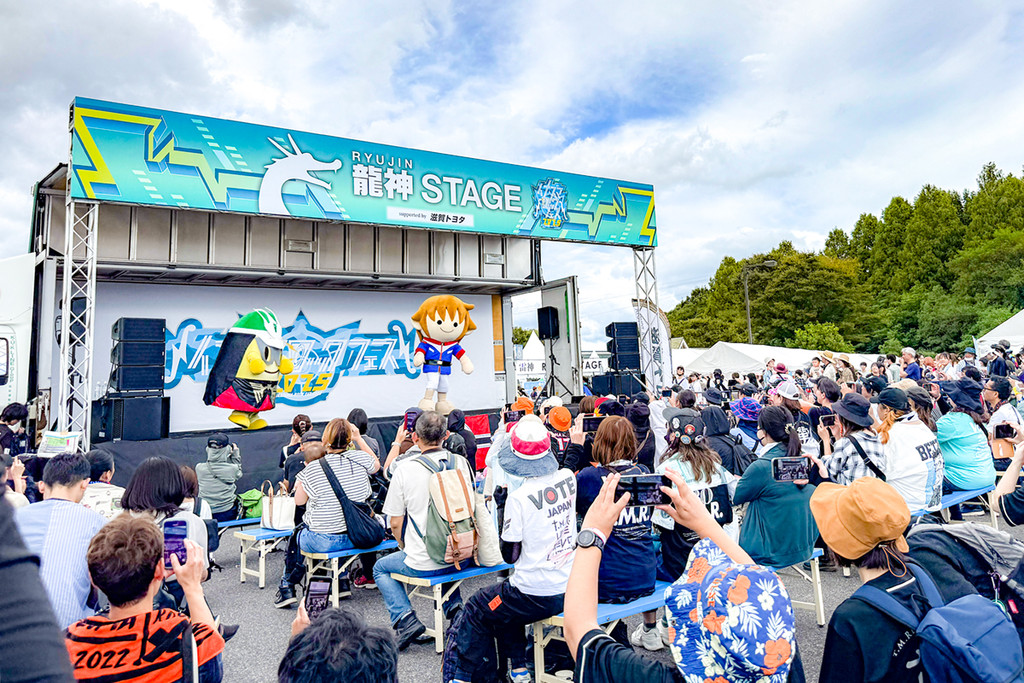
Somewhere along the way, Inazuma stopped being simply a music event held in Shiga.
It became something Shiga itself could take part in.
A place where the next stars begin
The free area has played another important role.
For young musicians, its stages have become a kind of gateway.
Artists such as THE ORAL CIGARETTES, 04 Limited Sazabys, and MY FIRST STORY once performed on stages in the free area before later moving up to Inazuma’s main Raijin Stage.
For some artists, Inazuma has been part of the path from a smaller stage to a much bigger one.
But it is not only musicians who get a chance to participate.
Students have also been involved in designing photo booths and other creative parts of the festival.
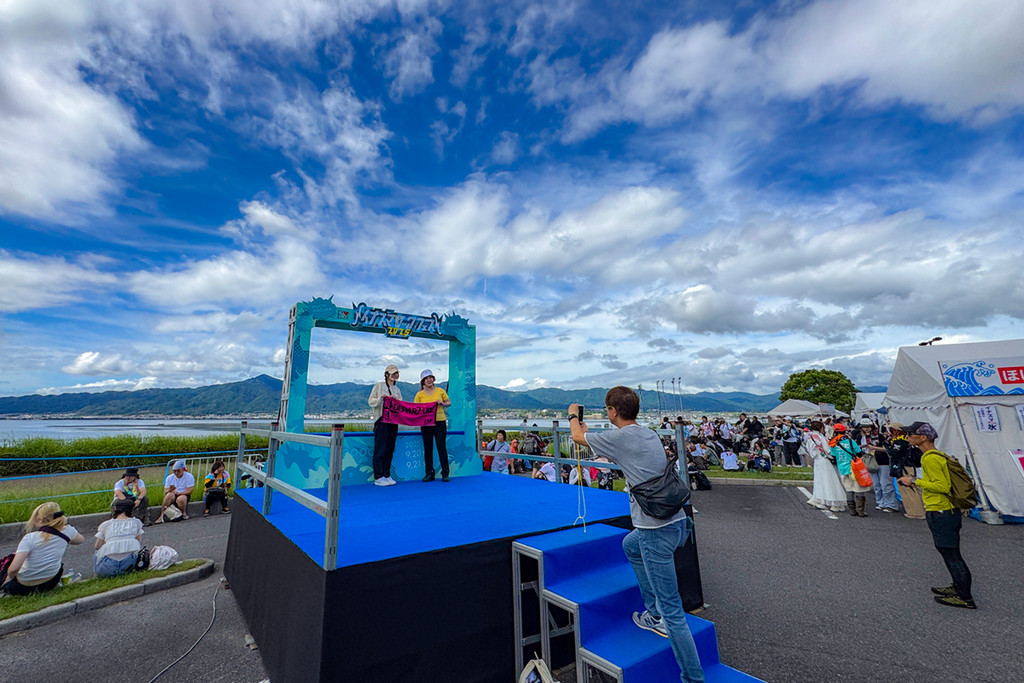
So Inazuma is not only a place to watch performers.
It is also a place where the next generation of musicians, designers and creators can begin to find their stage.
Growing together with the local community
Inazuma does not exist only for the two or three days when the festival is open.
Its relationship with the local community begins before the first song is played.
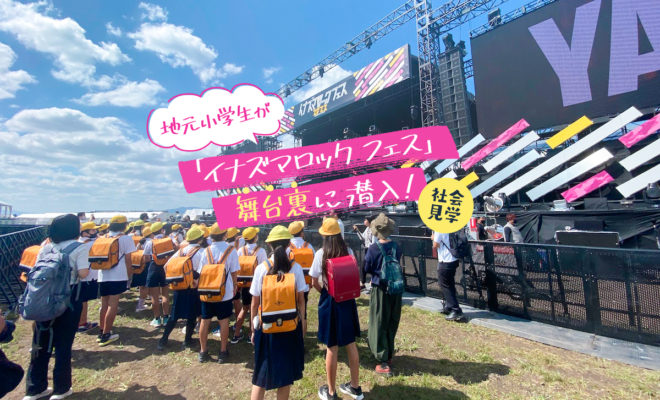
In the days leading up to the festival, local elementary school students have been invited to visit the venue and see the stage being built.
For children growing up nearby, it is a rare chance to see behind the scenes of a huge event happening in their own hometown.
How is a giant stage constructed?
How does an event prepare to welcome tens of thousands of people?
What does it take to transform an ordinary lakeside field into one of western Japan’s largest music festivals?
There is another familiar figure connecting Inazuma with local life: T.M.Revolution’s mascot character, Tabo-kun.
Tabo-kun has joined local high school students in rice planting, and has even taken part in the harvest to promote one of Shiga’s unique environmental initiatives, Fish Cradle Rice Paddies.
These rice paddies are designed to reconnect rice fields with nearby waterways, creating places where fish can spawn and young fish can grow.
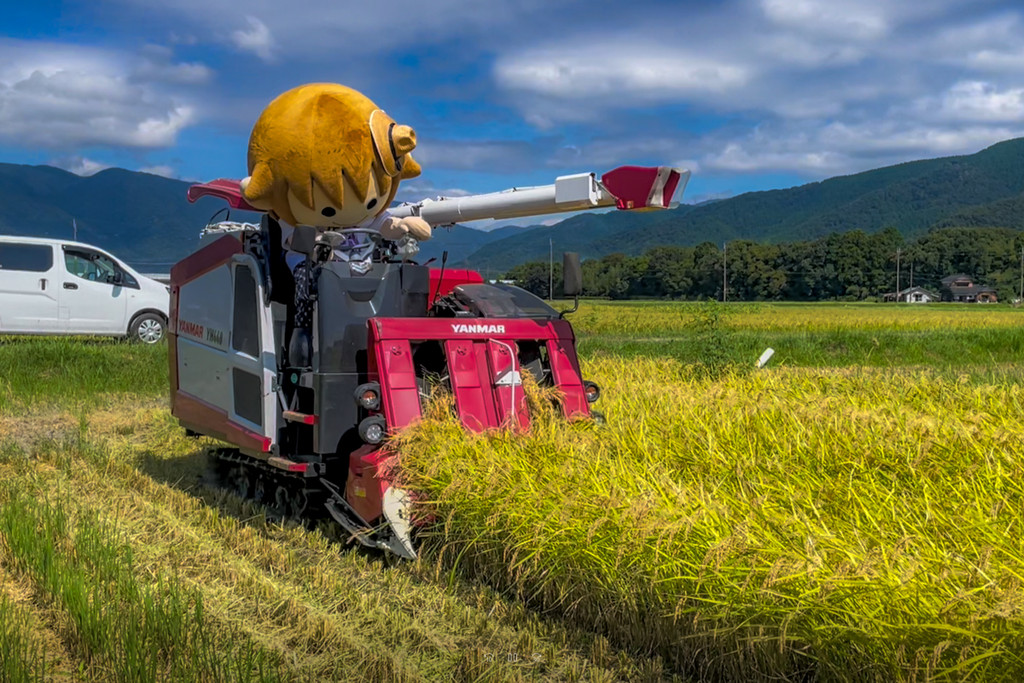
And the story does not end in the field.
Rice harvested through these local activities is also used in Inazuma Curry, one of the festival’s popular food dishes.
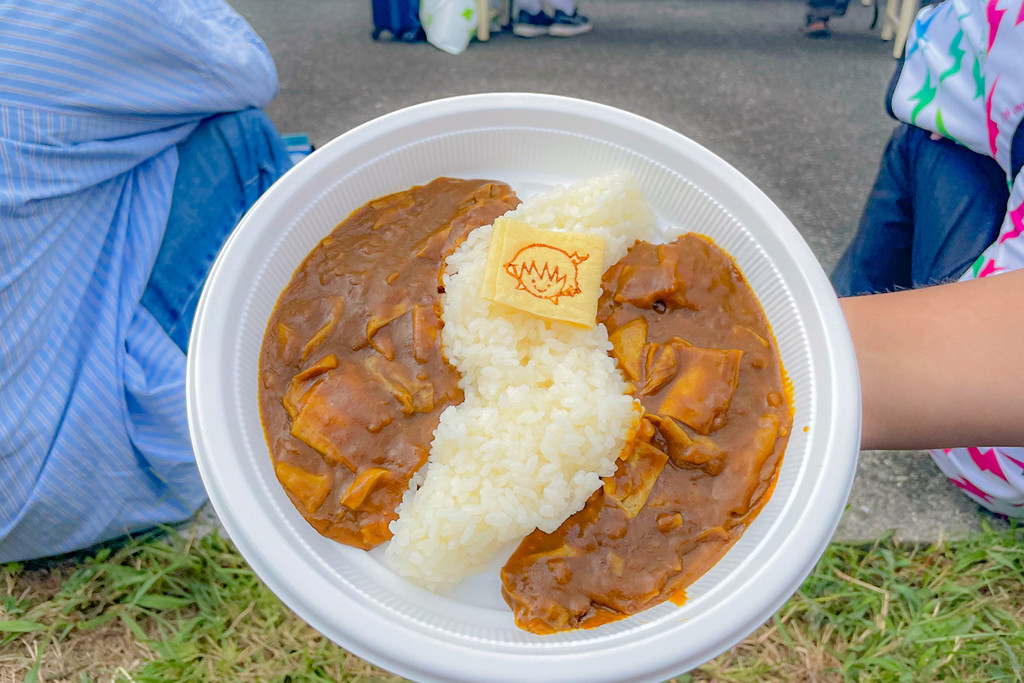
Rice grown in Shiga.
Local people taking part.
And food served back at the festival.
Small connections like these are part of what has made Inazuma more than a temporary event.
The festival is supported by the place around it — and, in return, the festival keeps finding new ways to become part of that place.
Beyond “rock,” into the next stage
Inazuma began as a rock festival.
But over 17 years, it slowly became too large — and perhaps too diverse — to fit neatly inside that definition.
There is music.
There is food from Shiga.
There is Lake Biwa.
There are environmental projects, local businesses, families, children, young artists and creators.
What began with Takanori Nishikawa and a rock stage gradually grew into something closer to an annual matsuri — a local gathering that people in Shiga could feel was partly their own.
And now, in 2026, the name is changing.
Inazuma Rock Fes is becoming FEST. INAZUMA.
The word “Inazuma” remains.
But “Rock Fes” disappears.
That change feels significant.
After 17 years, the festival is looking again at what it has become: keeping what matters, while opening space for something new.
So this is more than a rebrand.
It is a chance for Inazuma itself to move into its next stage.
From a rock festival to something broader.
From an event held in Shiga to something that has grown with Shiga.
From Inazuma Rock Fes to FEST. INAZUMA.
A modern local festival by Lake Biwa is beginning its next chapter.
FEST. INAZUMA 2026: Three days from September 19
T.M.Revolution, Takanori Nishikawa, abingdon boys school and artists from across genres will once again gather in Shiga.
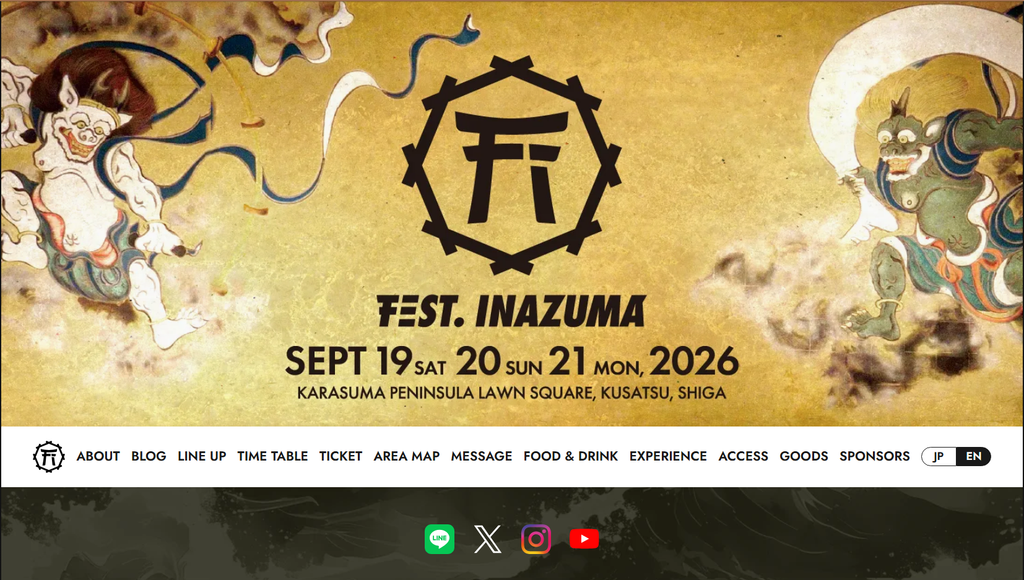
For the latest artist lineup, timetable and ticket information, check the official FEST. INAZUMA website.
After 17 years of growing beside Lake Biwa, what will this new Inazuma look like?
This “Silver Week,” a cluster of holidays in late September, the Karasuma Peninsula begins another chapter.
FEST. INAZUMA 2026
Dates
September 19 (Sat), 20 (Sun) and 21 (Mon, national holiday), 2026
Venue
Karasuma Peninsula Lawn Square, Kusatsu City, Shiga
Next to the Lake Biwa Museum
LIVE AREA
Doors: 10:00
Start: 11:30
Scheduled end: 19:15
FREE AREA
Open from 9:00
Official Website
FEST. INAZUMA 2026


この記事へのコメントはありません。