

Korian: Where a Literary Master Found His Table
【Just 1 hour from Kyoto Station by train】
In the northwestern corner of Lake Biwa, where a series of capes reach out into the water, a ryotei sits quietly at the edge of the water.Open the door, and there is nothing before you but the lake.This is Korian.
Eating Lake Biwa — The Fermented Culture of Funazushi
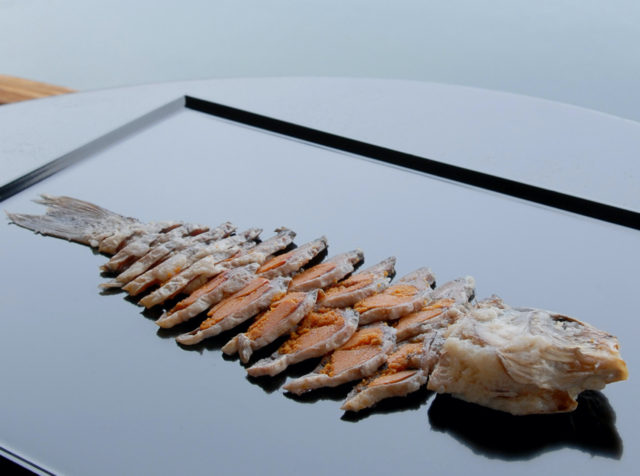
Korian traces its roots to Uoji, a funazushi maker established some 230 years ago.
Funazushi is one of Japan’s oldest fermented foods — said to be the very origin of sushi itself. Nigoro crucian carp, caught from Lake Biwa, are salt-cured and layered with rice, then left to ferment for months, sometimes years. The flavour depends on the particular cultures of bacteria that live within each maker’s storehouse. At Uoji, those same cultures have been at work for 230 years.
To eat funazushi here, looking out at the lake where the fish was caught — that alone is reason enough to come.
A Place Designed to Feel Lake Biwa with All Five Senses
On the ground floor, a kaiseki dining room. On the upper floor, accommodation for one party per day. Both rooms face a large window. Beyond it, there is only the lake.
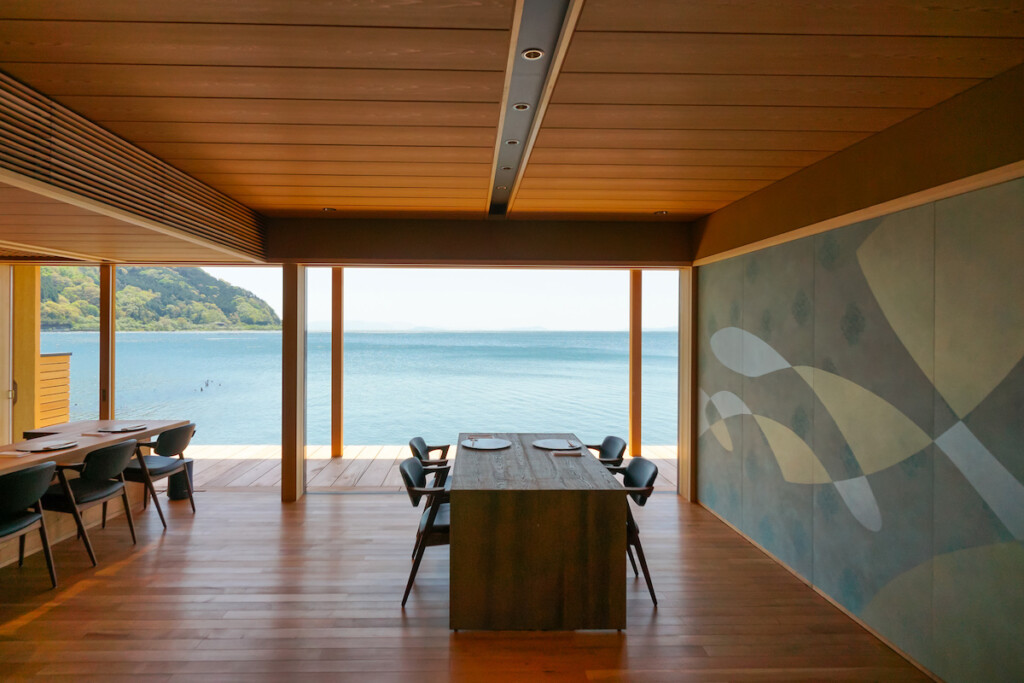
The fusuma screens in the dining room are made using the traditional karakami technique — their appearance shifts with the light, giving the space a quiet, layered depth. The height of the tables, the size of the windows, the angle of the eaves — every detail has been considered to let the landscape speak. Each table is set at a slight angle, so that every seat looks out over the water.
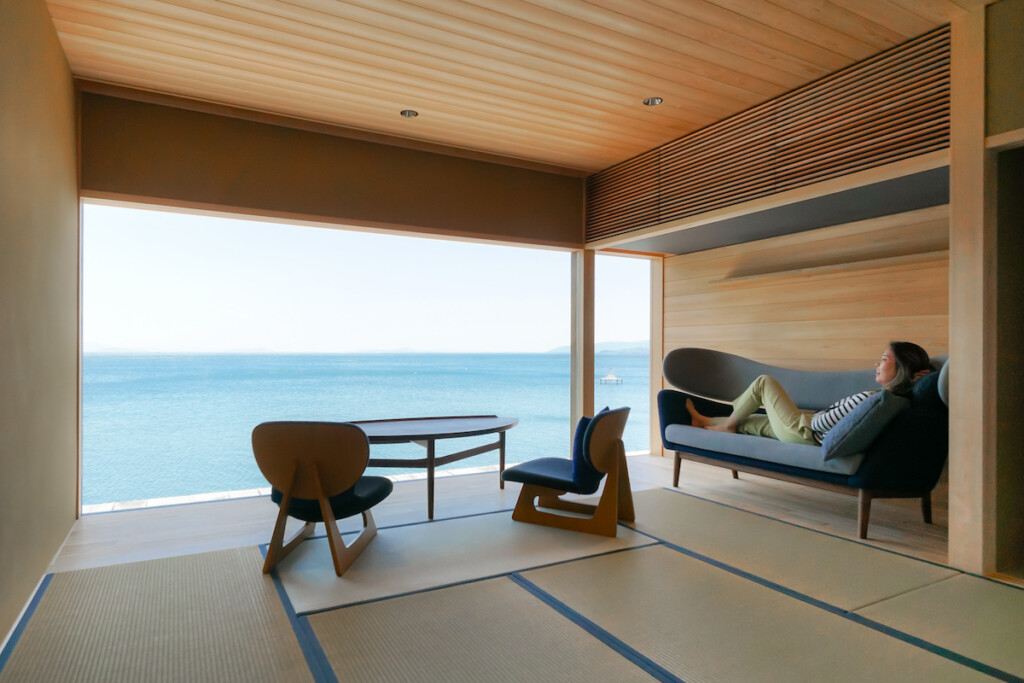
Upstairs, the room holds only what is needed. Each chair, table, and sofa has been chosen with a single intention: to let the body settle, and the senses open. The furniture — by Danish master Finn Juhl, whose work defined a generation of Scandinavian design — sits naturally against the fjord-like landscape of Lake Biwa’s northern shore. The sofa, as it happens, is named Fjord.
Sit here. Watch the light move across the water. It is the kind of moment that stays with you.
The Landscape That Inspired a Writer
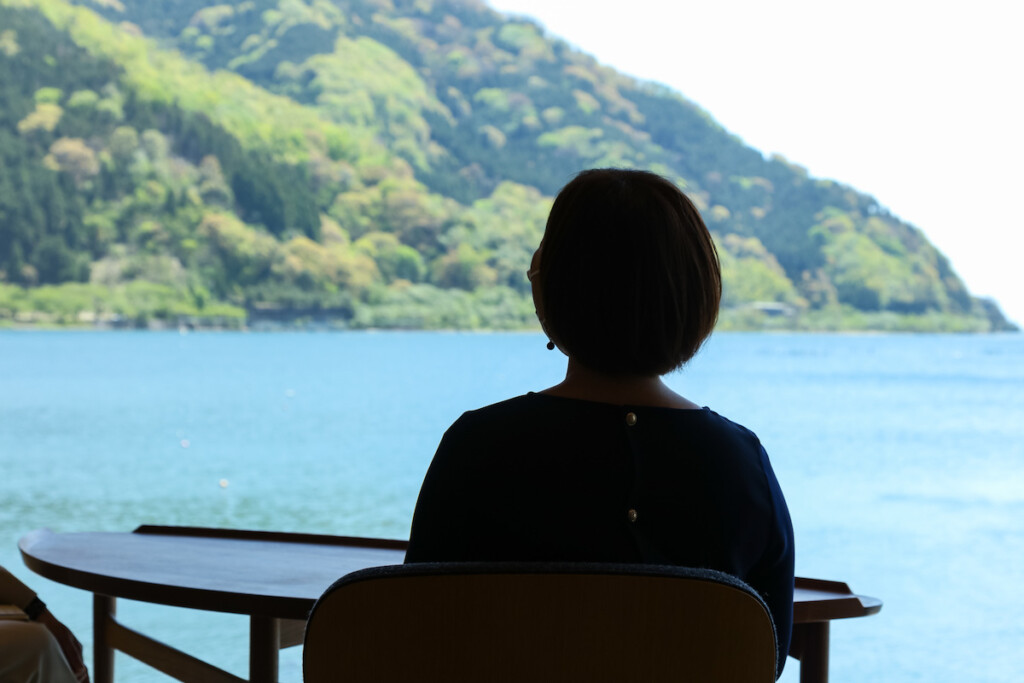
The novelist Endo Shusaku first came to Korian in search of the finest funazushi he could find. He kept coming back. It was he who gave the restaurant its name — a quiet play on his own pen name, Kitsune-an.
In an essay, he wrote of the view:
“On a February afternoon, the mountains surrounding that inlet were covered in white snow, and the surface of the lake in the weak winter light was still and desolate. I stood there, hands in my coat pockets, feeling for a long moment as though I had arrived in the fjords of Sweden or Norway.”
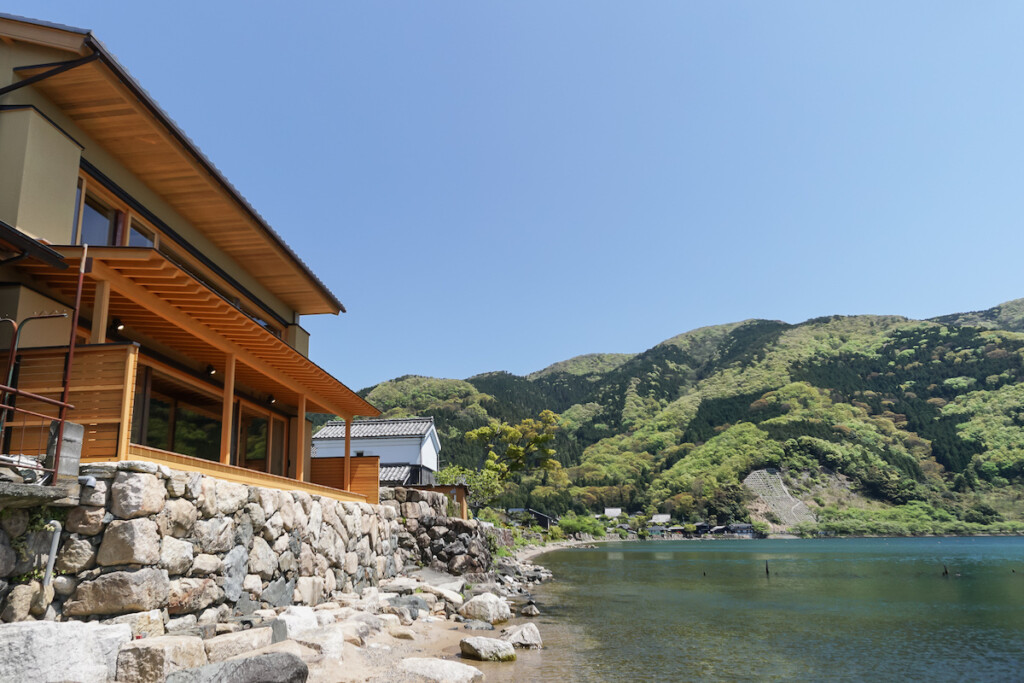
The landscape around Korian — where cape after cape folds into the lake — is said to resemble the fjords of northern Europe. In winter, snow covers the mountains and the lake falls silent. In summer, the wind moves visibly across the water. It is a place that shows a different face with every season.
Plan Your Visit
From Kyoto Station, take the JR line to Omi-Imazu Station (approx. 50 min), then taxi (approx. 15 min).
Closed Tuesdays and the 1st and 3rd Wednesdays of each month.
Reservations and enquiries: http://korian.jp
関連記事一覧

Step Back in Time to the Battle of Shizugatake: A S...

Indulge in Serenity by Lake Biwa at Hotel Lake Otsuka

Chikubushima: An Island of Prayer on Lake Biwa

2025: A Journey of 2,025 Meters! Discover JapanR...

The Timeless Appeal of Hikone Castle: A National Tr...

Discover Omihachiman: The Legacy of William Merrell...

Fujigasaki Ryujin: A Mystical Power Spot by Lake Biwa

この記事へのコメントはありません。